
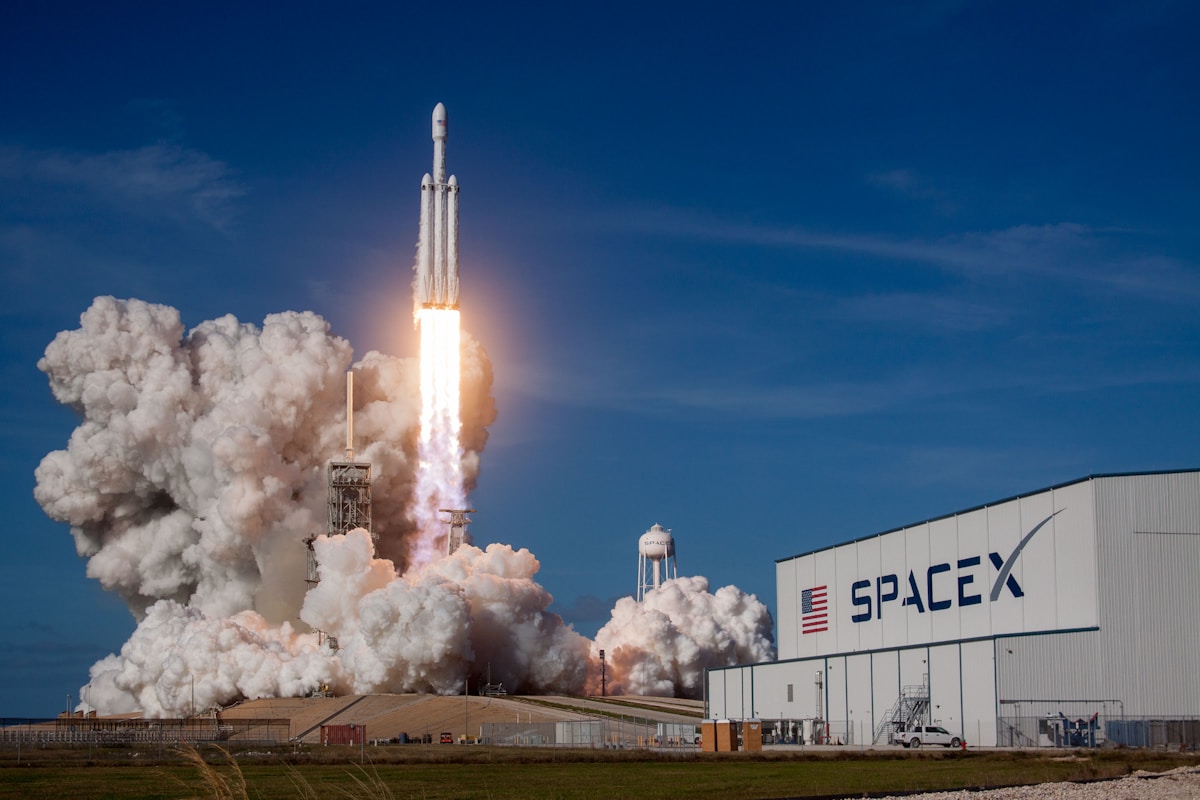
SpaceX has achieved a stunning launch cadence milestone in 2026, reaching its 600th Starlink satellite launch of the year by mid-March — less than three months into the year. This represents the fastest launch pace in the company’s history and underscores SpaceX’s increasingly dominant position in both commercial launch services and satellite internet.
The Numbers
To put the pace in perspective: SpaceX is averaging roughly 7-8 Starlink satellites launched per day in 2026. Each Falcon 9 mission typically carries between 20-29 Starlink V2 Mini Optimized satellites, and the company has been launching multiple missions per week from both Cape Canaveral in Florida and Vandenberg Space Force Base in California simultaneously. Individual Falcon 9 boosters are now routinely flying for their 10th, 12th, and even 14th missions — a testament to the reusability program that has fundamentally transformed the economics of spaceflight.
Starlink Coverage Expands
The expanded constellation is enabling Starlink to offer service in increasingly remote and previously underserved regions globally. The latest generation satellites offer higher throughput and lower latency, with residential service now widely available across North America, Europe, Australia, and large parts of Asia and South America.
Starship Development Continues
Alongside the relentless Falcon 9 launch cadence, SpaceX continues development of Starship — the fully reusable super-heavy launch vehicle designed to eventually carry Starlink satellites in much larger batches and ultimately carry humans to the Moon and Mars. Starship’s development is proceeding in parallel with NASA’s Artemis program, for which SpaceX has a contract to provide the Human Landing System for the first crewed Moon landing.
The Competition
SpaceX’s launch volume dwarfs all competitors combined. Blue Origin’s New Glenn has completed just a handful of missions, and United Launch Alliance continues operating its Atlas V and Vulcan Centaur rockets at a fraction of SpaceX’s cadence. Amazon’s Project Kuiper satellite internet constellation — SpaceX’s primary Starlink competitor — is still in early deployment phases, launching on a variety of rockets including New Glenn, Atlas V, and Arianespace.